| ||
 | ||
|
You can also read this newsletter in German. Do you have any suggestions, requests or questions? Please contact us! In this edition +++ Campus Leonardo - Launchpad for International Encounters +++ spark - Learning Languages, Experiencing Cultures, Shaping the Future +++ Campus Leonardo - Launchpad for International Encounters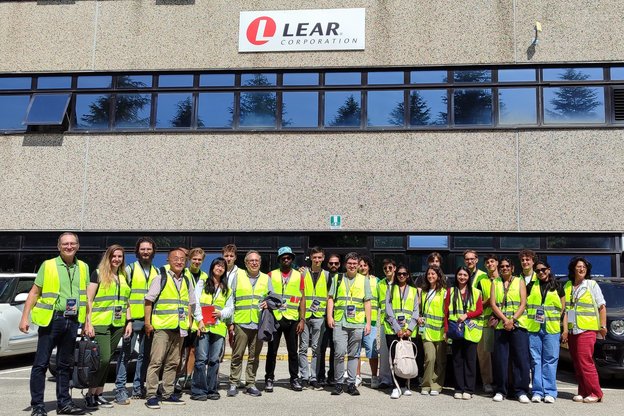
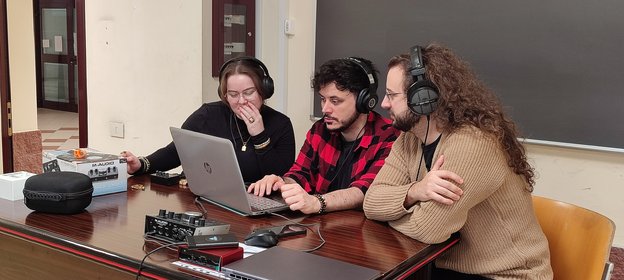
Campus Leonardo stands for international collaboration, cultural exchange, and innovative academic networking. Initially founded with a strong focus on Italy, Campus Leonardo has evolved over recent years into a dynamic platform that brings together students, faculty, and researchers across national borders. Its aim is to create new spaces for interaction, collaborative projects, and interdisciplinary dialogue – in a manner that is practice-oriented, creative, and international. At the core of this initiative lie academic collaborations, academic mobility, and the fostering of linguistic and intercultural competencies. These activities encompass workshops, guest lectures, international project weeks, and exchange programmes, as well as cultural events designed to strengthen an understanding of European diversity. Joint projects in the fields of architecture, engineering, and cultural studies have proven particularly successful. A prime example is the long-standing partnership with Sapienza Università di Roma (DICEA Department – Dipartimento di Ingegneria Civile, Edile e Ambientale), through which architecture students collaborate on international projects, gaining not only professional skills but also invaluable intercultural experience abroad. These initiatives include joint projects focused on urban planning, which take place alternately in Darmstadt and Rome. In the process, all participants gain insight into local conditions, diverse working methods, and cultural perspectives, while working together to develop harmonious and sustainable solutions. Another example is the collaboration with the Civica Scuola di Musica Claudio Abbado in Milan – and, more recently, with the Università Roma 2 Tor Vergata – in which students enrolled in the “Sound, Music and Production” bachelor’s programme work under the guidance and supervision of faculty members from both institutions to jointly plan, organise, and execute concert recordings, as well as handle the subsequent post-production. Through this close collaboration, students not only gain practical experience in both artistic and technical domains but also deepen their understanding of diverse forms of expression and professional working cultures. These activities are complemented by field trips to companies that offer participants insights into professional life (including Hitachi, Stellantis, Leonardo, Alfa Romeo, ABB), cultural highlights (such as the historic centre of Naples – a UNESCO World Heritage site – Pompeii, the Abbey of Montecassino, Renaissance-era Rome, and many others), as well as local institutions and universities (Politecnico di Milano, Sapienza Università di Roma). This creates a vibrant international learning environment that equally fosters professional, personal, and cultural development. Moreover, Campus Leonardo continues to evolve: building upon the German-Italian collaboration, the initiative is now increasingly opening up to other European partner countries. The first step in this process involves collaboration with institutions in Spain. Plans are underway to implement exchange formats similar to those already developed with a focus on Italy – specifically, joint courses and international networks that permit additional perspectives within Europe for both students and faculty. A point worth noting is that Campus Leonardo does not view itself as part of existing European university alliances, but rather as a supportive and complementary initiative. Running parallel to established programmes, Campus Leonardo creates new opportunities for flexible collaborations and strategically expands international contacts and cultural experiences. The result is an open network that – working alongside existing academic channels – continues to support and foster innovation, creativity, and personal development. Campus Leonardo invites all those interested in experiencing Europe actively: through exchange, shared ideas, and international collaboration. Anyone wishing to discover new horizons, strengthen their intercultural competencies, and become part of a vibrant European network will find the ideal platform here. Further information and details on current projects can be found on the Campus Leonardo website (available in German and Italian). spark - Learning Languages, Experiencing Cultures, Shaping the Futurespark (sprache austausch raum kollektiv)—language exchange space collective) is a vibrant meeting place dedicated to international communication, cultural exchange, and personal development. It was inaugurated last October and has since evolved into a vital hub for exchange and collaborative learning. The innovative concept blends language acquisition with social interaction, cultural exploration, and interdisciplinary collaboration, thereby creating a space where students can do more than just study – they can actively network and grow together. At the core of this initiative lies the philosophy that language serves as a key to fostering connections, ensuring inclusion, and paving the way for future career success. Furthermore, the programme places a strong emphasis on cultivating communicative and social skills, teamwork capabilities, and intercultural sensitivity – competencies that are becoming increasingly indispensable in our globalised world. The space offers a wide array of practical and creative formats: "meet & eat" sessions and a language tandem programme bring together students from diverse backgrounds, fostering genuine connections in everyday life; intercultural workshops provide insights into both familiar and lesser-known cultural spheres, broadening horizons and encouraging openness toward different perspectives and lifestyles; original version film screenings followed by a discussion as well as themed cultural events facilitate informal exchange and allow participants to experience language in a direct, immersive way. Digital innovation also plays a pivotal role. Through modern e-learning platforms, virtual language rooms, mobile apps, and interactive VR/XR applications, spark enables flexible and sustainable learning – unconstrained by place and time. Gamification formats further enrich the programme, encouraging the creative and playful integration of language into daily routines. Moreover, spark strengthens the university’s international network through group projects with a global focus, teamwork within multicultural contexts, and opportunities to gain valuable experience for both academic and professional pursuits. Simultaneously, the centre fosters a deep appreciation of core European values – such as openness, diversity, solidarity, and democratic participation. spark takes a holistic approach to education: the focus lies not only on academic success but also on personal development, social interaction, and the ability to navigate confidently within international and culturally diverse environments. This creates an open, modern space for learning and exchange that connects students and staff, thereby strengthening the university’s standing as an international and forward-looking institution. Further information, as well as the current programme of events, can be found on the spark website. 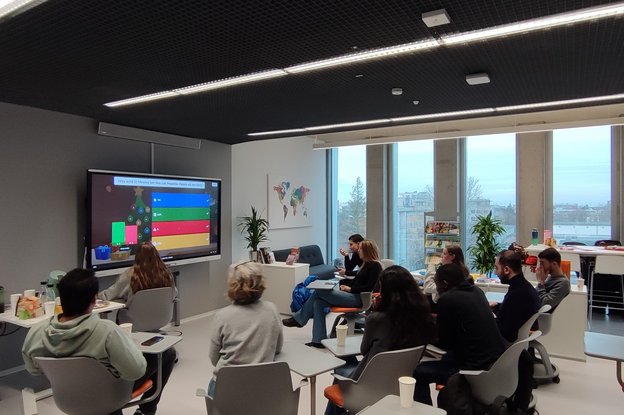
| ||
Sprachenzentrum | ||